What Is Congress and Why Does It Exist?
Congress is the legislative branch of the federal government, responsible for writing, debating, and passing laws. Its existence reflects a basic principle of democratic governance: laws should be created by representatives chosen by the people. Rather than concentrating power in a single authority, Congress provides a forum where different regions and viewpoints are meant to be heard.
The structure and authority of Congress are designed to balance efficiency with restraint. By dividing responsibilities among many elected officials, the system aims to prevent sudden or unilateral decisions that could affect the entire country. This deliberate pace is often criticized, but it is central to Congress’s intended role.
The Role of Congress in Government
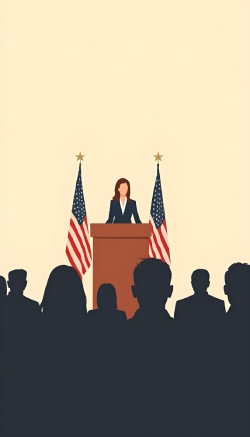
Congress creates federal laws, but that is only part of its responsibility. It also oversees the executive branch, approves budgets, and has the authority to declare war. Through hearings and investigations, Congress can examine how laws are implemented and how public funds are used.
In addition, Congress serves as a public forum. Debates, committee meetings, and recorded votes allow citizens to see how their representatives act on national issues. This visibility is a core feature of representative government, even when outcomes are contentious.
The Bicameral Structure
Congress is divided into two chambers: the House of Representatives and the Senate. This bicameral structure was created to balance population-based representation with equal representation for states. Each chamber has distinct rules, powers, and terms of office.
The House is designed to respond more quickly to public opinion, with members elected every two years. The Senate, with longer terms and fewer members, is intended to be more deliberative. Together, they must agree on legislation before it becomes law.
Representation and Accountability
Members of Congress are elected by voters in their states or districts. This connection is meant to ensure accountability, as representatives must regularly face elections. Citizens can influence Congress not only through voting, but also through communication, advocacy, and public debate.
At the same time, representatives are expected to balance local interests with national considerations. This tension is an ongoing feature of congressional decision-making and shapes how laws are proposed and amended.
A Brief History of Congress
The history of Congress is closely tied to the formation of the United States itself. From its earliest days, the legislative branch was seen as a safeguard against concentrated power. Over time, Congress has evolved alongside the country, adapting to social change, expansion, and new political challenges.
Understanding this history helps explain why Congress operates as it does today. Many of its rules and traditions reflect lessons learned from earlier forms of governance and from periods of conflict and reform.
Origins in Colonial Experience
Before independence, the American colonies had experience with representative assemblies under British rule. These bodies allowed colonists to participate in local decision-making, even though ultimate authority rested with the Crown. Conflicts over taxation and representation played a major role in shaping colonial attitudes toward legislative power.
When independence was declared, these experiences influenced the desire for a strong legislative branch. Lawmaking by elected representatives was seen as essential to protecting individual liberties and preventing arbitrary rule.
Formation Under the Constitution
Congress was formally established under the U.S. Constitution in 1789. The framers debated extensively over its design, particularly the balance between large and small states. The resulting compromise created a two-chamber system that still defines Congress today.
Early Congresses focused on building the foundations of the federal government. They passed laws to establish courts, executive departments, and financial systems, setting precedents that continue to shape federal authority.
Expansion and Change Over Time
As the United States expanded westward, Congress grew in size and complexity. New states brought new representatives, altering political balances and priorities. Major historical events, such as the Civil War and the Great Depression, led Congress to take on broader responsibilities.
Over the twentieth century, Congress became more institutionalized, with permanent committees and professional staff. These changes increased its capacity to address complex issues, but also made the legislative process more intricate and harder for the public to follow.
Congress in the Modern Era
Today, United States Congress operates in a fast-paced political environment shaped by media, technology, and polarization. While its constitutional role remains the same, public expectations and pressures have changed significantly.
Modern Congress faces challenges related to partisanship, workload, and public trust. Understanding its historical foundations helps place these challenges in context and clarifies why reform debates are often difficult and deeply rooted.
Key Functions of Congress at a Glance
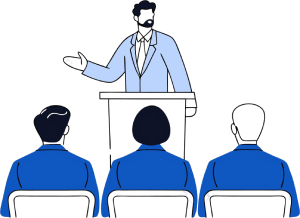
Congress performs several core functions that define its role in the federal system. These responsibilities are interconnected and often overlap in practice.
- Drafting, debating, and passing federal legislation
- Approving the federal budget and taxation measures
- Conducting oversight of executive agencies
- Confirming certain presidential appointments
- Representing the interests of states and citizens
Together, these functions illustrate why Congress remains central to the operation of the U.S. government, even when its work is slow or contentious
The Big Picture: Why Congress Still Matters
Congress was established to translate the collective will of the masses into law, through the mechanism of discourse, compromise, and accountability. As complicated and ineffective as its procedures are, they reflect centuries of efforts to balance power and representation. The readers, informed about what Congress is, why it exists, and why it happened to come into existence, can apprehend better the present-day functions of the U. S. Congress which centre around their social lives.
Quick Links
BRGIE Government officials met with three senior members of the United States Congress in Washington, DC for extensive discussions: Congressman John Carter (R-TX), Congressman Tom Kean (R-NJ), and Congressman Ronny Jackson (R-TX). BRGIE lobbyists arranged and facilitated the… pic.twitter.com/ybbvB3N7ej
— Marvellous Arinze (@MArinze2993) September 11, 2024
Our Betting Partners