Types of Congressional Committees
Committees are central to how Congress operates. They allow lawmakers to specialize, review legislation in detail, and conduct oversight of government activity. Instead of debating every issue as a full body, Congress relies on committees to handle focused areas of policy and administration.
Each committee operates under rules set by its chamber and has defined responsibilities. While their authority varies, committees often determine whether proposed legislation moves forward or stalls early in the process.
Standing Committees
Standing committees are permanent bodies established to address specific subject areas such as finance, defense, or agriculture. They exist across multiple sessions of Congress and form the backbone of the committee system.
These committees review bills, hold hearings, and conduct oversight related to their assigned policy areas. Because of their continuity, standing committees develop institutional knowledge that shapes long-term legislative work.
Select and Special Committees
Select or special committees are usually created for a specific purpose or limited time. They may be tasked with investigating a particular issue, event, or emerging policy concern.
Unlike standing committees, these bodies typically do not have authority to advance legislation directly. Their role is often to gather information, produce reports, and make recommendations to the broader chamber.
Joint Committees
Joint committees include members from both the House and the Senate. They are often formed to coordinate work between the two chambers or to oversee shared administrative functions.
Most joint committees do not draft legislation. Instead, they focus on research, oversight, or internal congressional operations that benefit from cooperation across chambers.
Conference Committees
Conference committees are temporary committees formed to resolve differences between House and Senate versions of a bill. Their goal is to produce a single compromise text that both chambers can approve.
Once their work is complete, conference committees dissolve. Their role highlights how committees support coordination and negotiation within Congress.
Key Congressional Leadership Roles
Leadership roles help organize debate, manage schedules, and guide legislative strategy. While all members can introduce bills and vote, leaders play a central role in shaping what reaches the floor and when.
These positions exist in both chambers and across political parties. Leadership authority comes from internal rules and party organization rather than from the Constitution itself.
Chamber Leadership
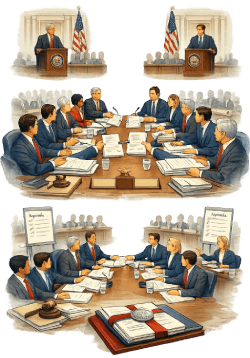
Each chamber has designated leaders responsible for managing floor activity and enforcing procedural rules. These leaders coordinate debates, recognize speakers, and interpret chamber rules during proceedings.
They also serve as the public and institutional voice of their chamber, representing it in formal communications and negotiations.
Party Leadership
Within each chamber, political parties select leaders to organize members and advance shared priorities. Party leadership helps coordinate voting strategies and manage internal disagreements.
These roles are especially important in closely divided chambers, where organization and discipline can affect whether legislation advances or stalls.
Committee Leadership Roles
Committees are led by chairs and ranking members, reflecting the majority and minority parties. Committee leadership controls hearing schedules, agendas, and which bills receive attention.
This authority gives committee leaders significant influence over the direction and pace of legislative review, even before bills reach the full chamber.
How Committees and Leadership Work Together
Committees and leadership roles are interconnected parts of the same system. Leadership relies on committees to review legislation thoroughly, while committees depend on leadership to bring their work to the floor.
Coordination is necessary to manage time, prioritize issues, and balance competing demands. Leaders often consult committee chairs when setting legislative agendas, especially for complex or high-impact bills.
At the same time, committees provide expertise that informs leadership decisions. This relationship helps Congress function as a large institution rather than as a collection of individual offices.
Behind the Scenes of Lawmaking
The floor debates and the final votes are the most visible aspects of what Congress does; all through, however, such a ceremonial ritual. Most of the ground is covered through committees and leadership roles. They filter the proposals, develop discussions, and essentially shape the focus of legislative priorities in the giant legislative process.
Quick Links
BRGIE Government officials met with three senior members of the United States Congress in Washington, DC for extensive discussions: Congressman John Carter (R-TX), Congressman Tom Kean (R-NJ), and Congressman Ronny Jackson (R-TX). BRGIE lobbyists arranged and facilitated the… pic.twitter.com/ybbvB3N7ej
— Marvellous Arinze (@MArinze2993) September 11, 2024
Our Betting Partners